When We’re Too Exhausted to Parent Without AI
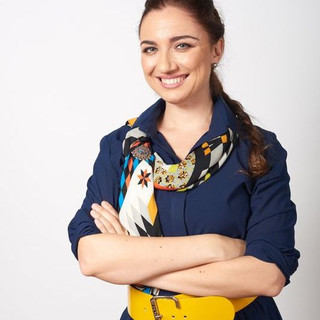
In her latest interview to NY Times, Marissa Mayer - ex-CEO of Yahoo - confessed that she had tasked her AI assistant to describe 3 things about her child in response to a school request. Summarizing it herself seemed too much of a task. This caused massive backlash on the internet, with users suggesting she shouldn’t be a parent if she is unable to say three good things about her own child without using tech.
I don’t know whether Marissa Mayer is a good mother, and I don’t think it matters. She may or may not have considered the consequences of her actions (unless, of course, it was an excellently planned PR campaign). What really interests me is that Mayer voiced something that is silently going on in many families around the globe – and what many parents are too embarrassed to admit publicly.
Why might an ordinary act of parental attention feel like a task that needs to be outsourced?

First of all, everyone is overwhelmed – and looking for shortcuts.
Our brains are overloaded – mostly with information garbage, like social media memes/news/Whatsapp groups/endless chats with ChatGPT, but also on trying to manage too many uncertainties in today’s world. I do talks in front of thousands of employees every month, and they share the same feeling – there is just too much going on, everyone is busy and overwhelmed, not enough thinking space. And there’s parenting on top, which has never been an easy task.
When we are in this state, even a simple request from a school teacher to come up with 3 phrases about your kid may feel overwhelming. This is known as a decision fatigue (well researched by Roy Baumeister and colleagues). When we experience decision fatigue, our brain starts looking for shortcuts – and this is what Mayer did by using AI. The task to describe your own child in 3 phrases is not overwhelming – unless you are already at the brink of exhaustion.
Second, shortcuts reduce an opportunity for reflection and attention. When we are overwhelmed, we run out of empathy. Empathy is a slow neural process – it does require time and brain space to process information (those interested in the subject should read Antonio Damasio). It takes mental space to notice another person's needs, to imagine their perspective, and to respond thoughtfully. When that space disappears, even acts of care can start to feel like additional demands.
An overwhelmed parent is less attentive, she does not have patience or even willingness to engage into preparing a school presentation – all they want is an easy way to cut out an extra 5 minutes for themselves, or to do more “important” stuff. This exhaustion is what pushes adults to leave their children in front of the screens for hours – not because they are bad parents, not because they do not realize the consequences – but because sometimes it’s the only way for them to take a breath.
This same exhaustion makes them go stare at the screen themselves – smartphones are the most common parental distraction. This has an impact on their children – studies show that excessive hours of screen time by parents also increase risk for excessive screen time for kids.
Third, a busy brain can’t come up with creative solutions. Moshe Bar’s research shows that in order to think creatively, our brains need to be empty. I have spoken to many parents – and they do admit that they tried using ChatGPT to come up with games or plan a party for their child, or to tell their child a fairy tale.
Some find it time-consuming and eventually inefficient. As one of them describes, “After what felt like 3 hrs of discussion about how great all my ideas were and how amazing the party was going to be, it became clear it wasn’t saving me time and I went back to pen and paper and was happy with the results but I was surprised how I got sucked in and found it hard to break away from a voice who was assuring me the party was going to be amazing!!!”
Others continue using it on a regular basis. These are not unloving or lazy parents. These are parents whose brains are overloaded with too much information.
The problem with this overwhelmed parenting is not that tech is used to replace some of the activities that used to be done by humans. It’s not even that every usage of AI consumes electricity and water (for data centres), and most of these use cases aren’t even needed (for example, an average conversation with ChatGPT has been calculated to use half a litre of water).
The biggest problem is when we stop distinguishing between tasks that should be made easier and experiences whose value lies in the fact that we undertake them ourselves. We risk building a culture in which fewer and fewer everyday situations invite people to practice attention, reflection, and personal expression – and we use technology as a cheap replacement for it.
If a child observes from an early age how a parent substitutes with AI certain aspects of their interactions, they will accept it as normal – even if they aren’t a user themselves yet. In twenty years, someone saying that they used AI to ask something about their kid will not be seen as gross - and it shifts the boundaries further into de-humanizing humanity.
Perhaps the real question is not why a mother would ask AI to describe her child. It is why so many of us have reached a point where even a few minutes of reflection feel like an unreasonable demand.
We have spent years optimizing our lives for speed, convenience, and efficiency. But not everything that takes time is wasted time. Sometimes, the point of an activity is not simply the result it produces, but the attention we give it along the way.
We may not need more powerful tools to help us do everything faster. We may need to reclaim the time and mental space to do some things ourselves - not because technology is inherently bad, or because good parents should never need help, but because a life in which every human activity becomes a task to optimize is a life in which we risk forgetting what those activities are for.
Take an action:
Help us protect our children’s ability to learn, read and concentrate by asking the UK Government to restore a better balance between screens and traditional learning in schools. Sign and share our petition to give children more time with books, handwriting and focused reading – especially in their early years. If you are not a UK resident or citizen, you can still support us by sharing it.


Comments